
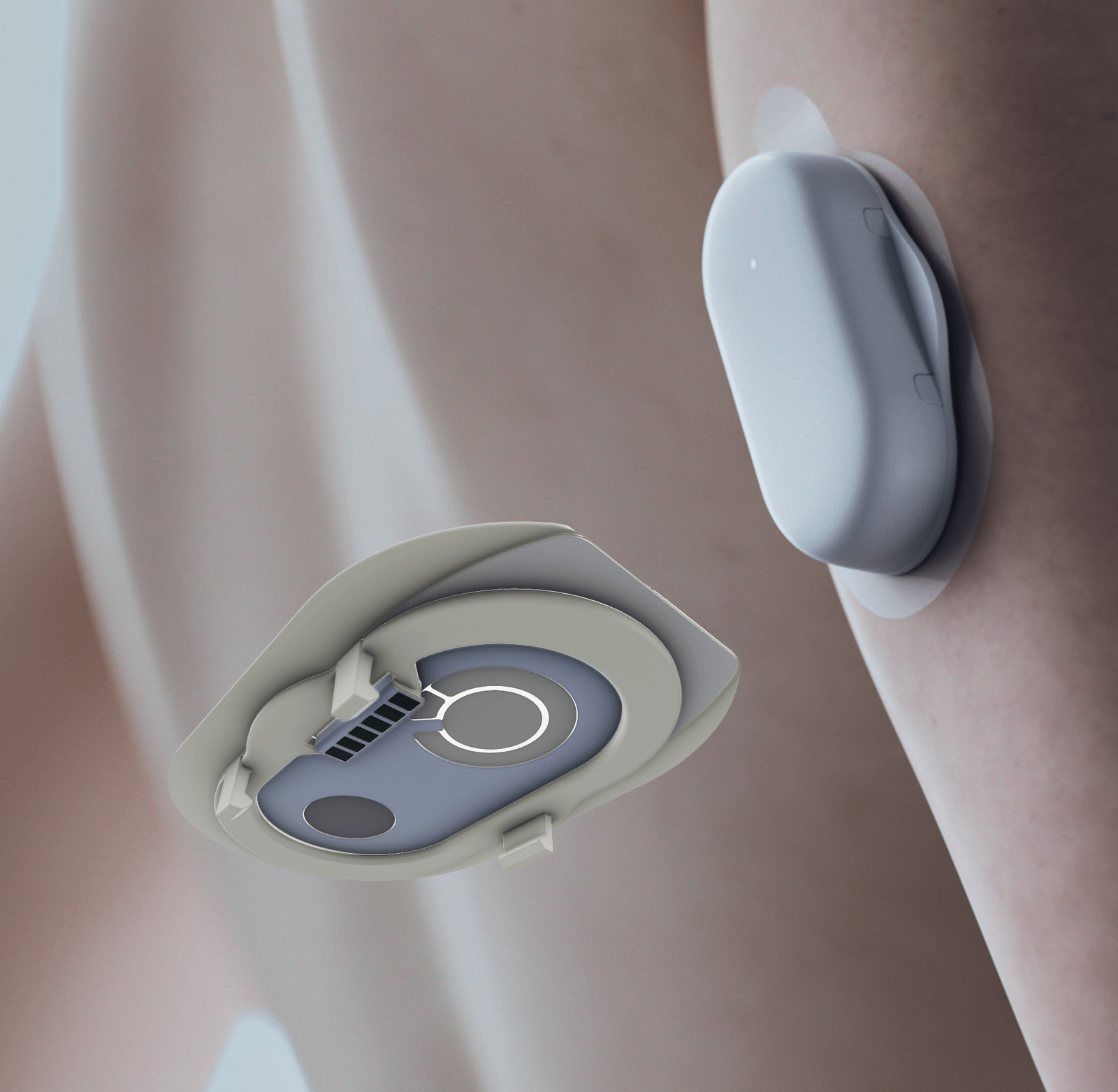
Case study — Wearable Biosensor — 2023
Magneto-Hydrodynamic CGM
No-needle continuous glucose monitoring — disposable biosensor patches with printed silver/silver-chloride electrodes.
- Must Have - Extremely thin and highly flexible disposable sensor patch
- Must Have - Printed silver/silver-chloride electrode contact layer
- Must Have - A snap-fit reusable, waterproof electronics module
- Must Have - Intuitive, minimal operator interaction
- Must Have - Comfortable and secure across the 7-day wear window
- Must Have - Stable signal delivery across the sensing area
- 7 days
- Wear time
- 0.9 mm
- Thickness
- 4
- Electrodes
- 2023
- Program year
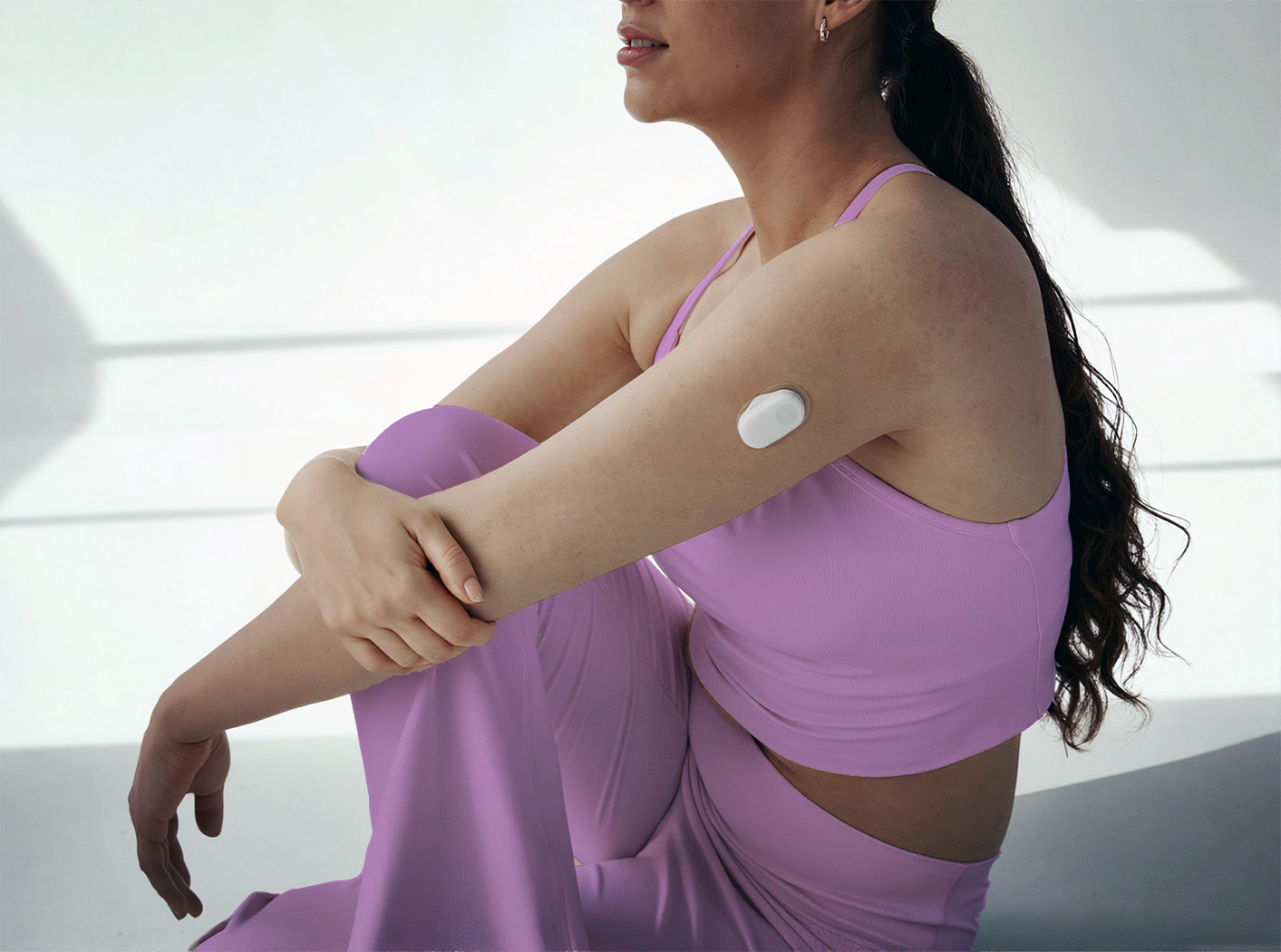
This design is based upon accuracy…. collecting and analyzing interstitial fluid for comparative analysis using proprietary chemistry.
Overview
A wearable that purposefully conforms to the human
The Magneto-Hydrodynamic CGM patch needed to be specifically designed to conform directly against the skin in order to ensure that a stable glucose signal was being captured. It had to stay conformable, comfortable and secure through the full 7-day wear window, while the disposable electrode layer kept each cycle clean — all wrapped in a form that read as a consumer wearable, not a clinical instrument.
Stack-up
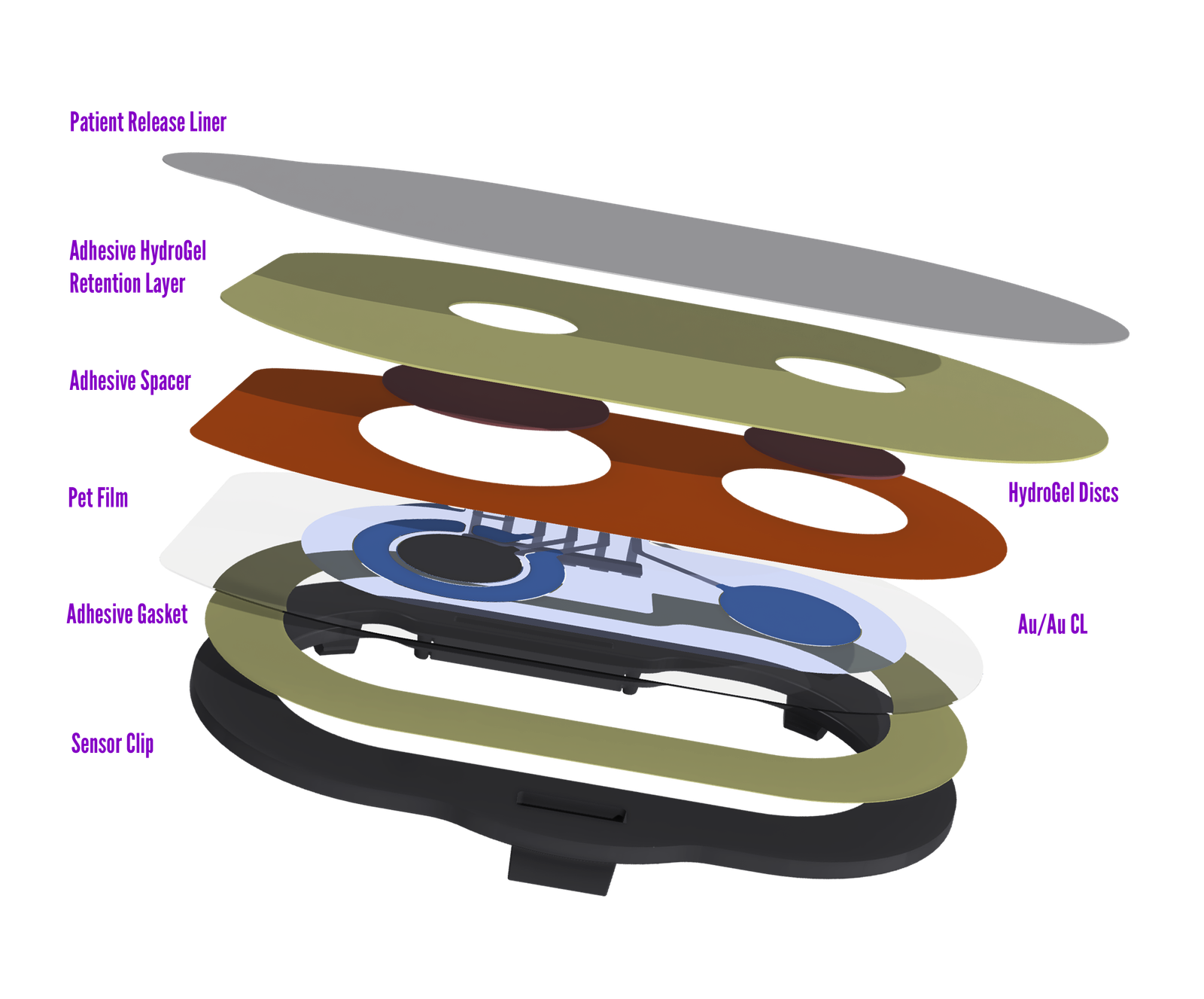
A conformable stack tuned for skin and signal.
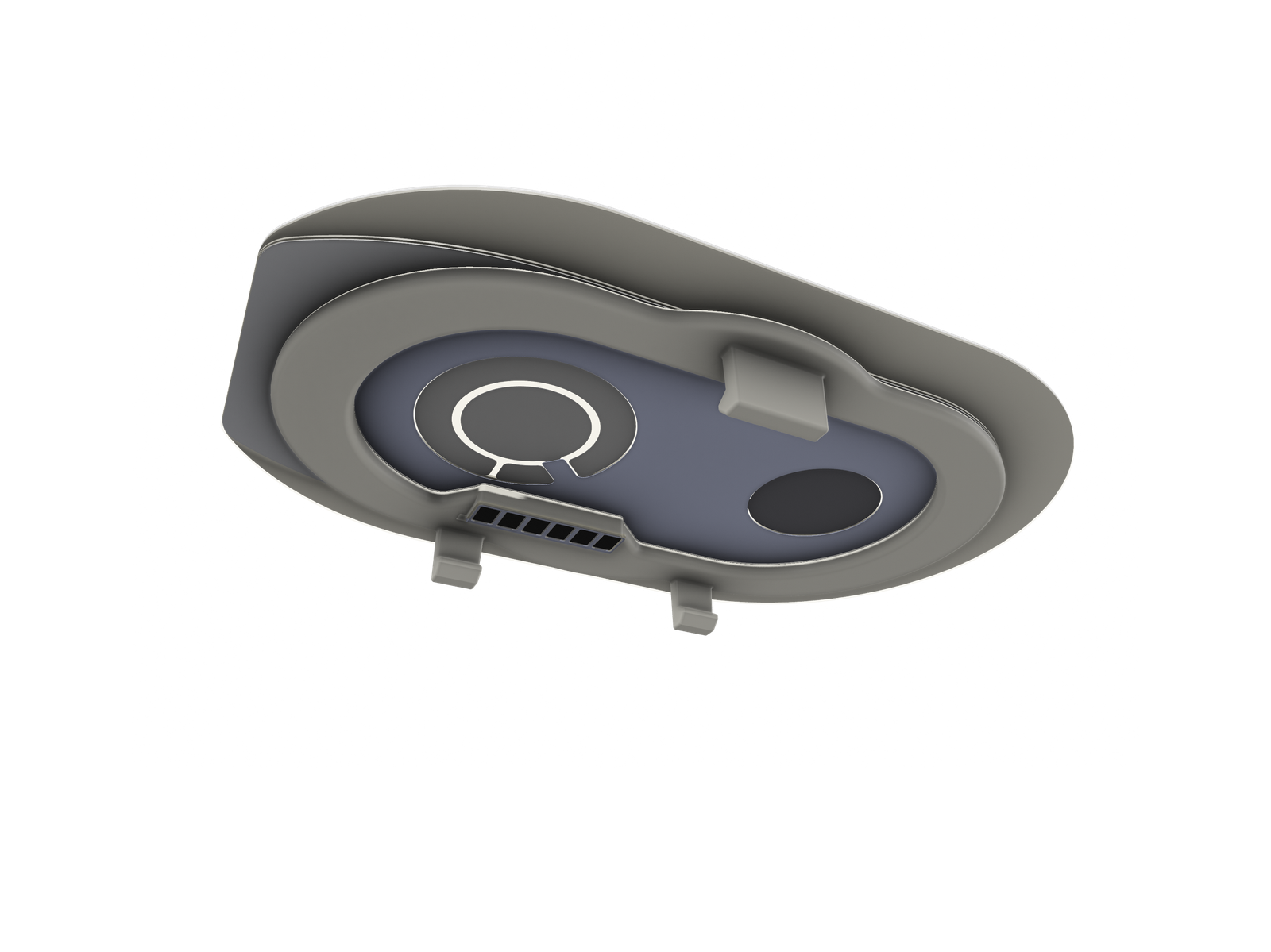
A medical-grade adhesive, a printed silver/silver-chloride electrode array, a flexible interconnect and a snap-fit reusable electronics module form a thin, skin-safe assembly. Every layer was specified against biocompatibility and wear-comfort targets.
- DISPOSABLE PRINTED AG/AGCL ELECTRODE LAYER
- PRINTED FLEXIBLE INTERCONNECT LAYER
- SKIN-SAFE BREATHABLE ADHESIVE BACKING
- Snap-fit reusable electronics module
SNAP SENSORS TO COMPUTER clip-on
The science
of Art
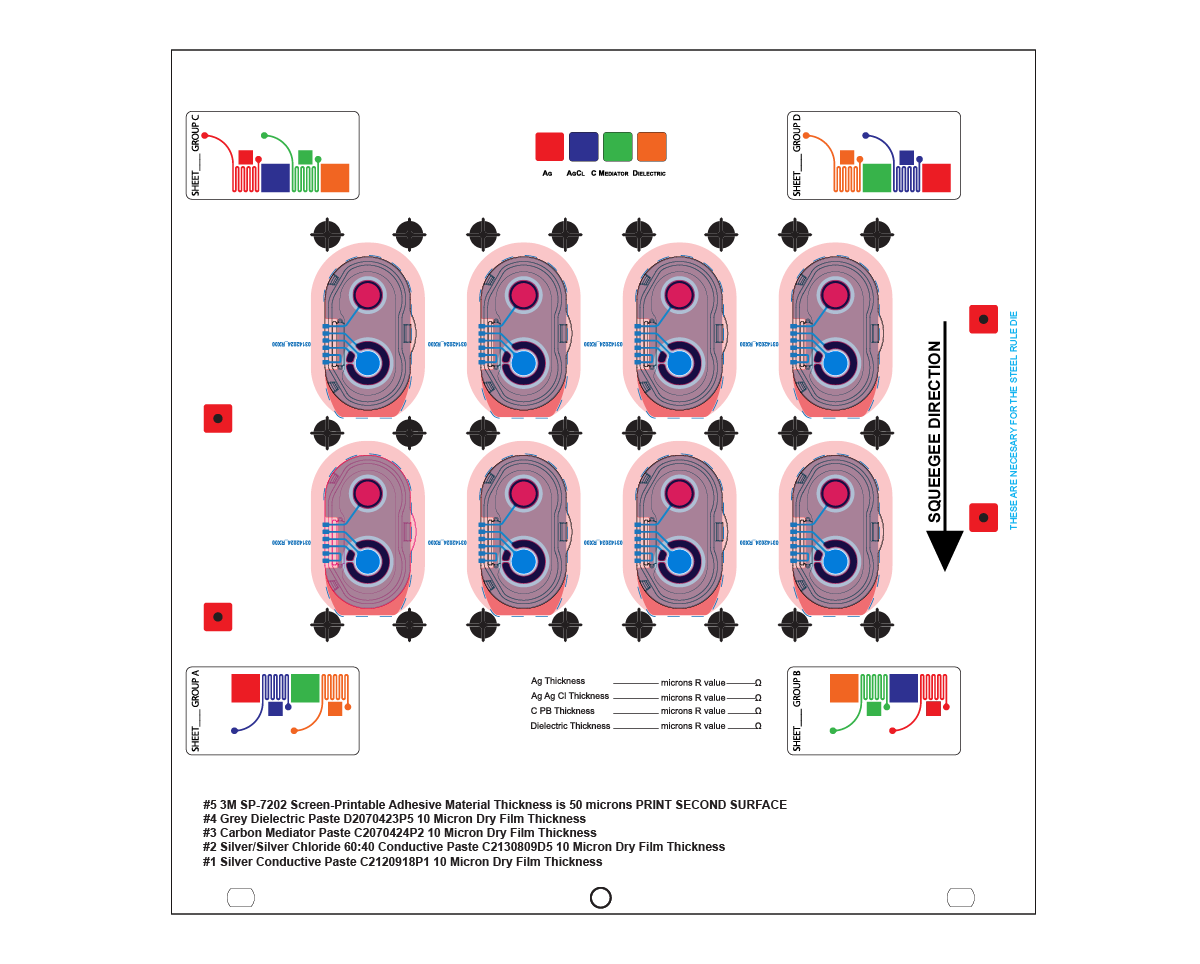
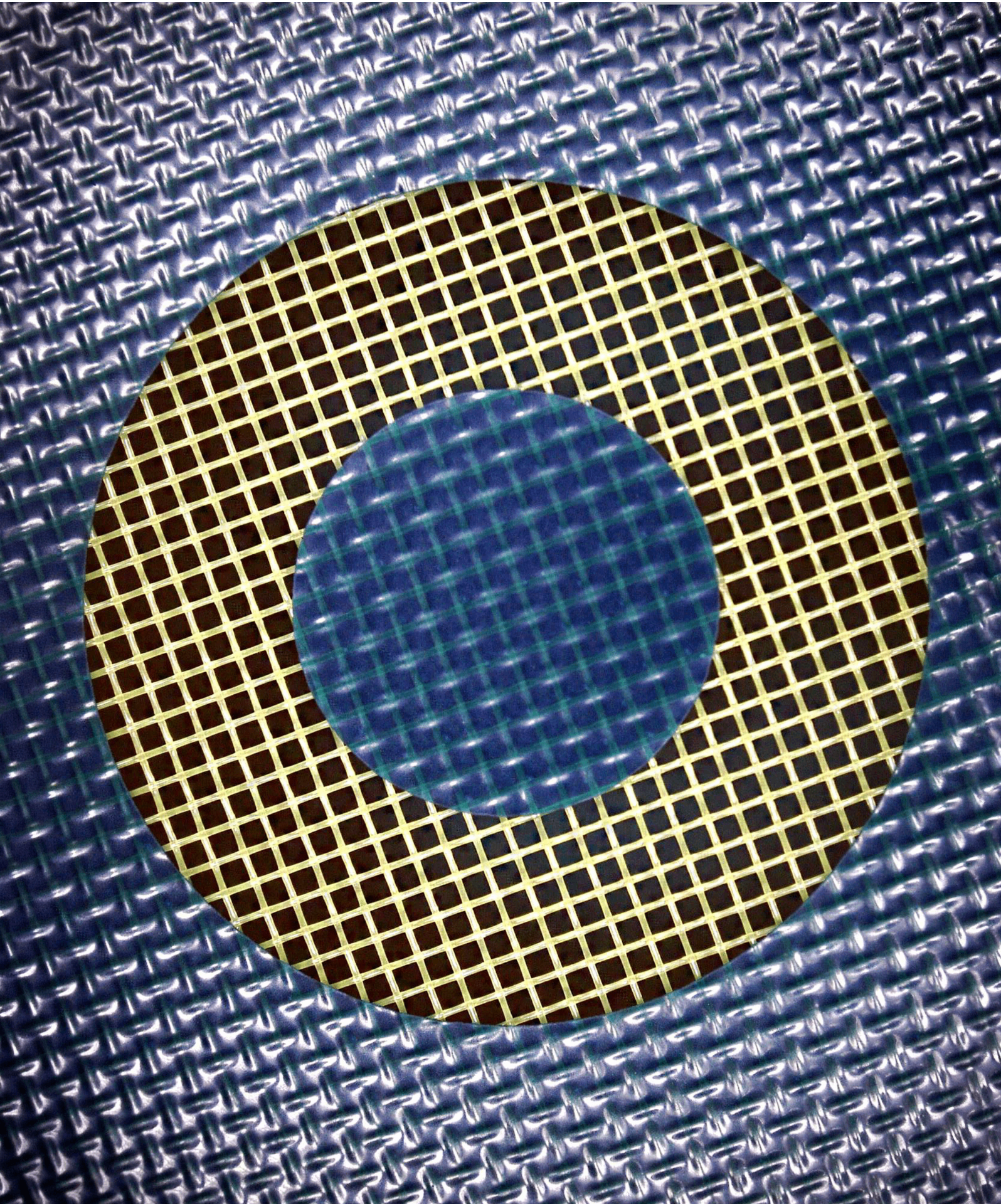
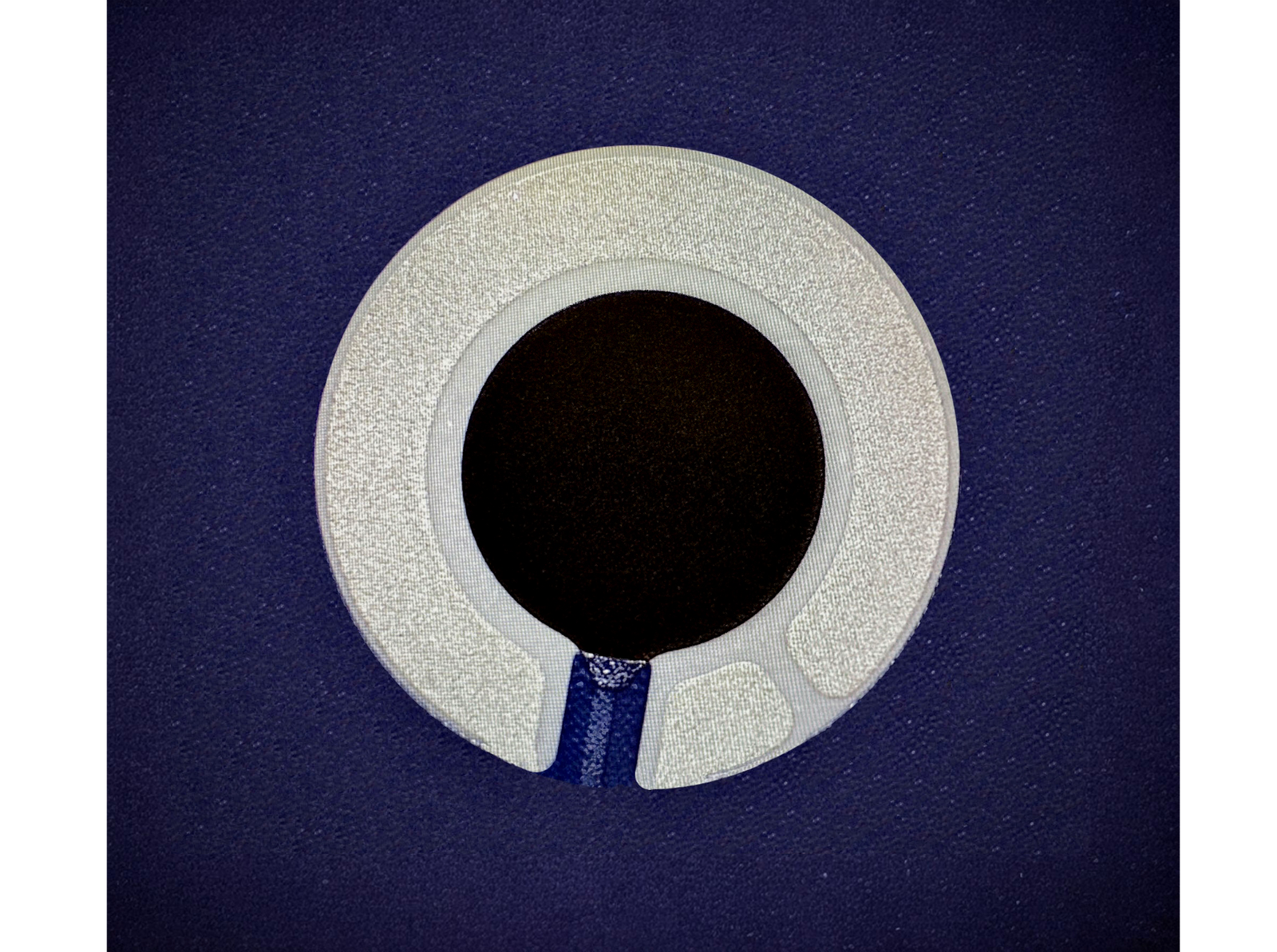
Beyond accurate artwork and printing, precision sensors require embedded sheet-level process control: four perimeter Kelvin metrology groups provide real-time, five-axis resistance measurements to confirm deposition consistency, thickness uniformity, and cure quality.
Repeating calibrated SENSORS begins with fundamentals
Printed Annular Perfection
Start with the fundamentals: this reference device must be designed, manufactured, and validated to the highest standards of medical research. Every printed sensor functions as a calibrated measurement instrument. Its value depends on accuracy, repeatability, and dependable performance from one unit and one production batch to the next. The goal is uncompromising batch-to-batch consistency, achieved through tightly defined and rigorously controlled tolerances.
Wearability
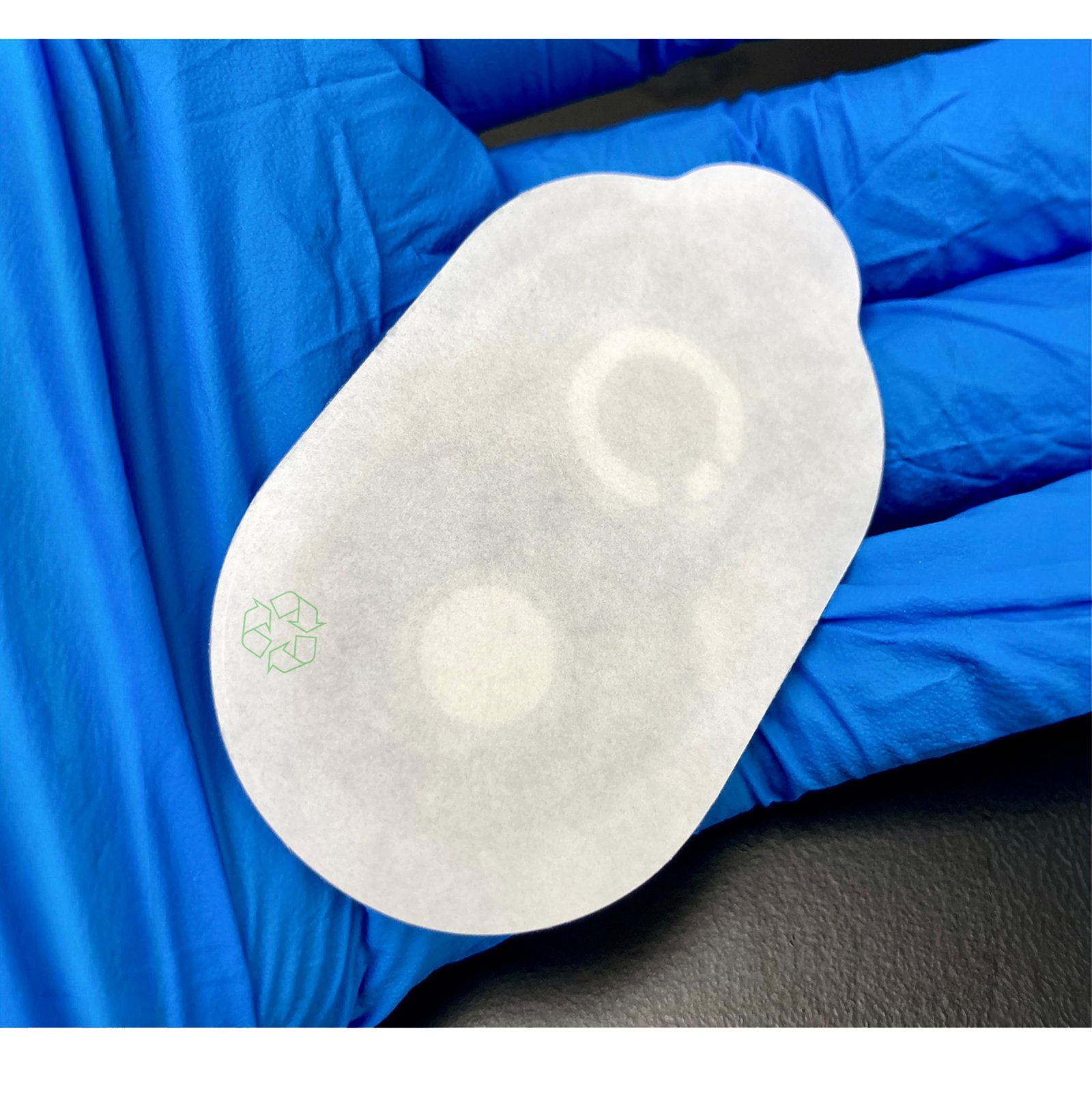
Recyclable Electrode Engineering
Engineered for reliable skin adhesion and consistent electrochemical performance, the disposable printed-electrode layer releases cleanly at end of wear. Zoned adhesives and differential-release chemistry prepare the clip-on sensor module for silver recovery and efficient recycling.
The brief
A no-needle continuous glucose monitor worn against the skin.
The Magneto-Hydrodynamic CGM patch senses interstitial glucose through printed silver/silver-chloride electrodes sealed against a disposable skin-contact layer. The interface had to feel like a wearable, not a medical device — thin, conformable and intuitive — while surviving skin chemistry, flex and a 7-day wear target.
Outcome
“Delivered a comprehensive production package—including finalized artwork and a validated skin-contact stack-up—resulting in a wearable with stable glucose signal capture and comfort across every 7-day wear cycle.”
The release package provided the print shop with layered vector artwork, separations, control drawings, and a documented skin-contact stack-up to eliminate production delays. Deliverables also included all necessary tooling, fixtures, assembly instructions, large-scale illustrations, and ISO-compliant quality documentation.
Next step
Have a wearable biosensor that needs this kind of discipline?
Send a sketch, a stack-up, or a failing sample. Most enquiries get a technical reply within one business day.