
Case study — DNA ROBOTIC MICROLAB — 2005
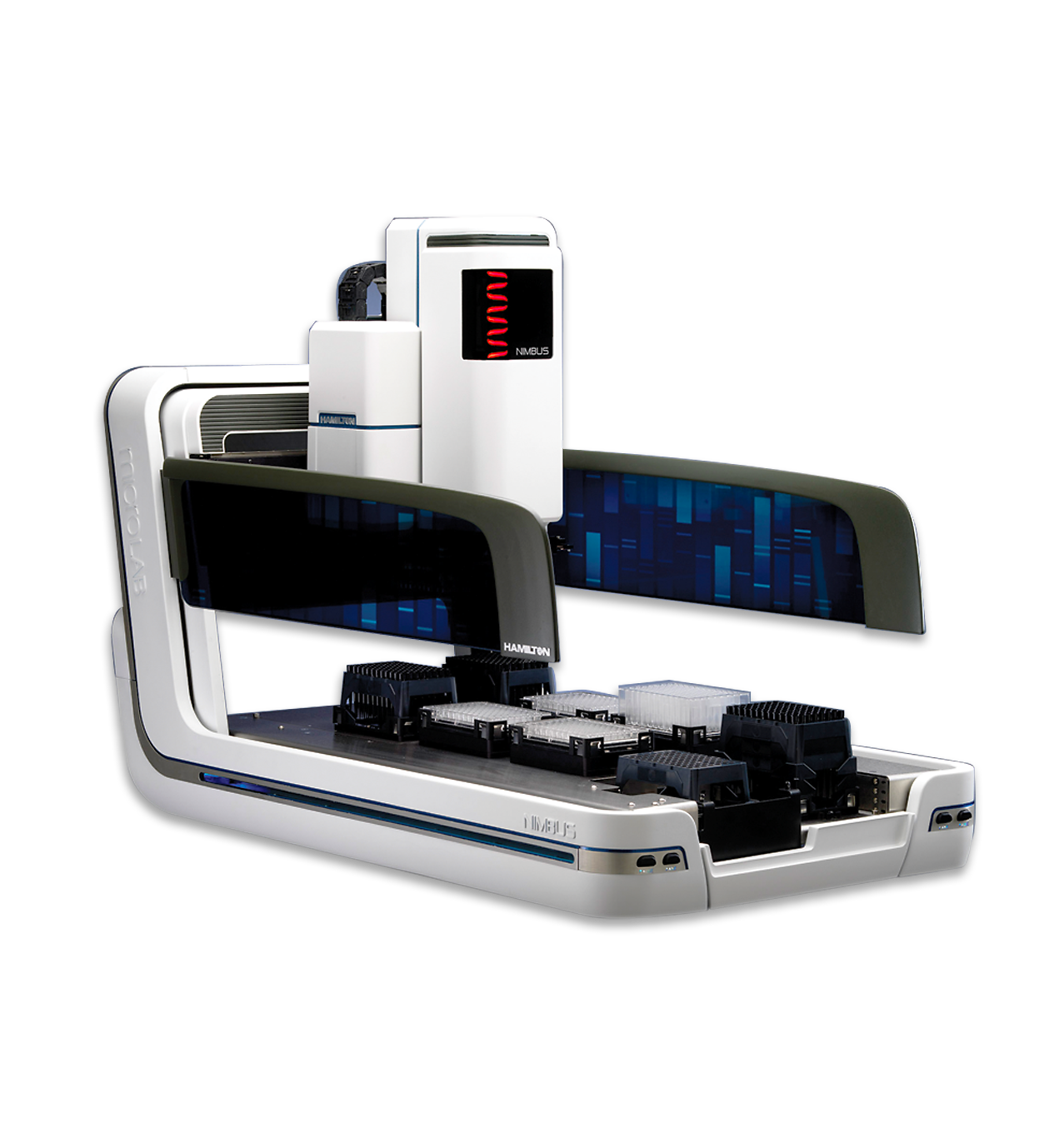
Hamilton Nimbus
Client Requests were defined with 5 must haves and one seemingly simple statement.
- Must Have - Fits on a standard laboratory benchtop
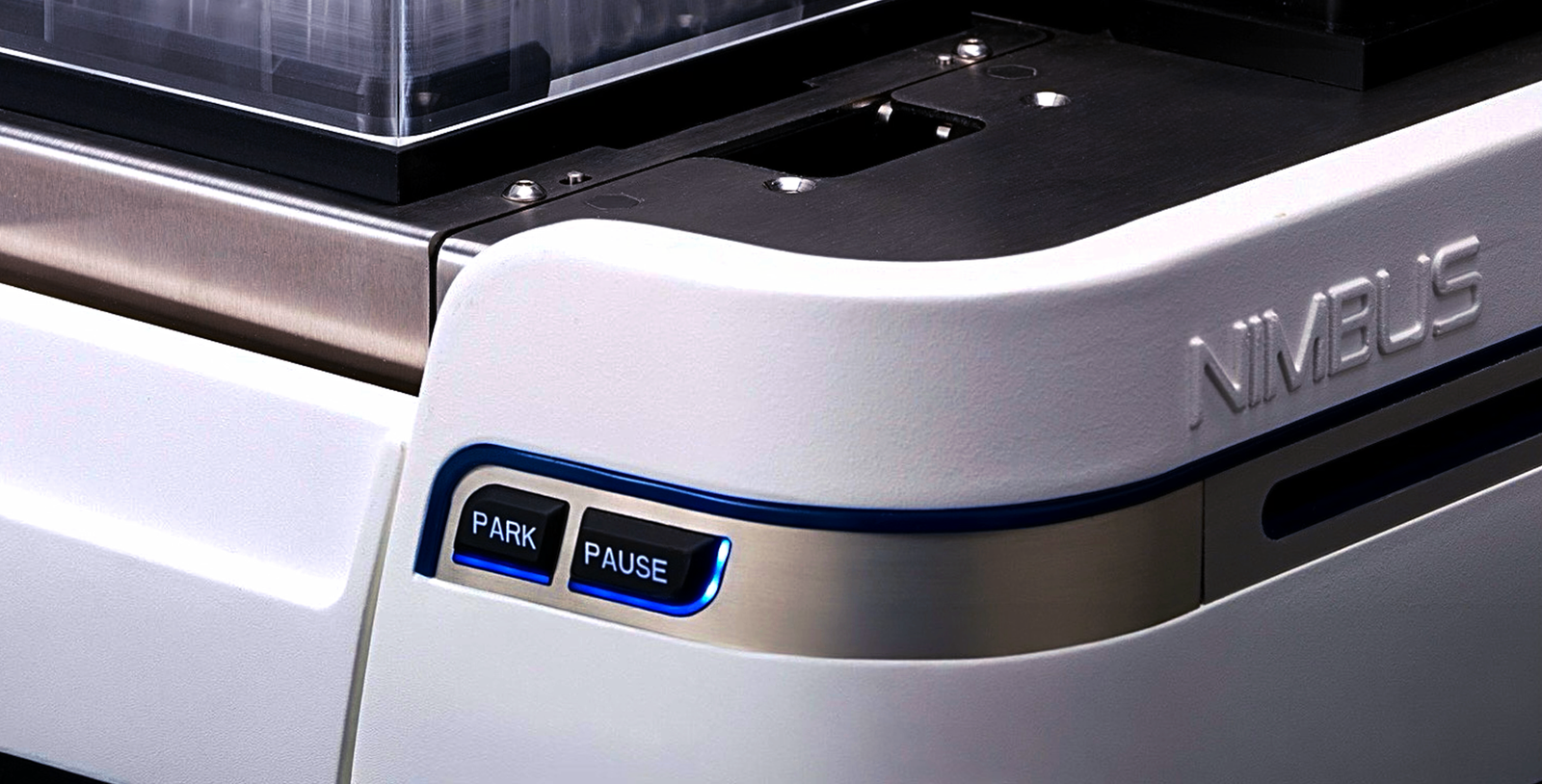
- Must Have - Tactile, Audible, Haptic and Backlit Visual operator interaction
- Must Have - Extreme precision fluid handling for DNA sequencing events
- Must Have - Intuitive visual management with minimal operator intervention
- Must Have - “Movement with Grace” at near undetectable machinery audio levels
- Must Have - It must be perceived as a “PIECE OF ART”
- 7
- Layer count
- IP66
- Sealing
- ±8%
- Legend uniformity
- 2024
- Program year
Overview
An interface built with haptic, audible and visual intuitive intention
The Nimbus console serves as the hub of a high-throughput genomics workflow, where operators interact with it while gloved, under intense lab lighting, and amidst frequent disinfectant wipe-downs. The Park/Pause HMI was engineered to remain legible, sealed, and tactile under these rigorous conditions, appearing as an integral component of the instrument rather than an afterthought. To prevent accidental triggers, the silicone Park button requires 480 grams of actuation force and is 15% narrower than the Pause button, which operates at 200 grams.
Stack-up
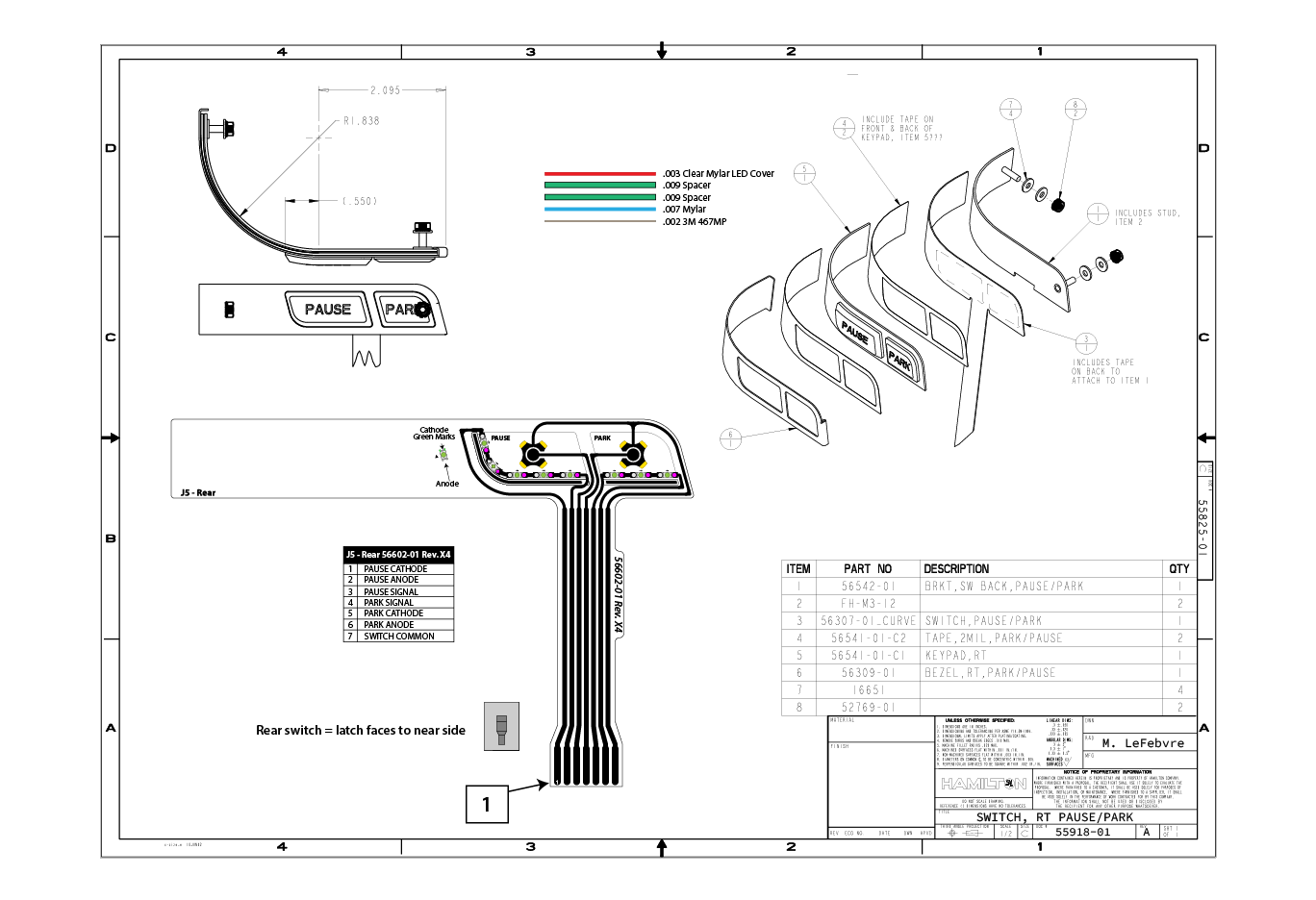
Seven layers, one sealed assembly.
Hard-anodized aluminum, medical silicone, laminated PCAP, acrylic light-guide diffusor and a tuned adhesive stack form a sealed seven-layer assembly. Every layer was specified against the laboratory disinfectant list.
- Hard-anodized clear coated aluminum fascia bezel
- Dual pour silicone rubber with integrated optical light pipes5
- Integrated screen-printed PCAP sensor for proximity haptics
- Integrated LEDs operating at 33% duty cycle, 66% animated mode status active
Work of art
Introducing mechanical design to Art
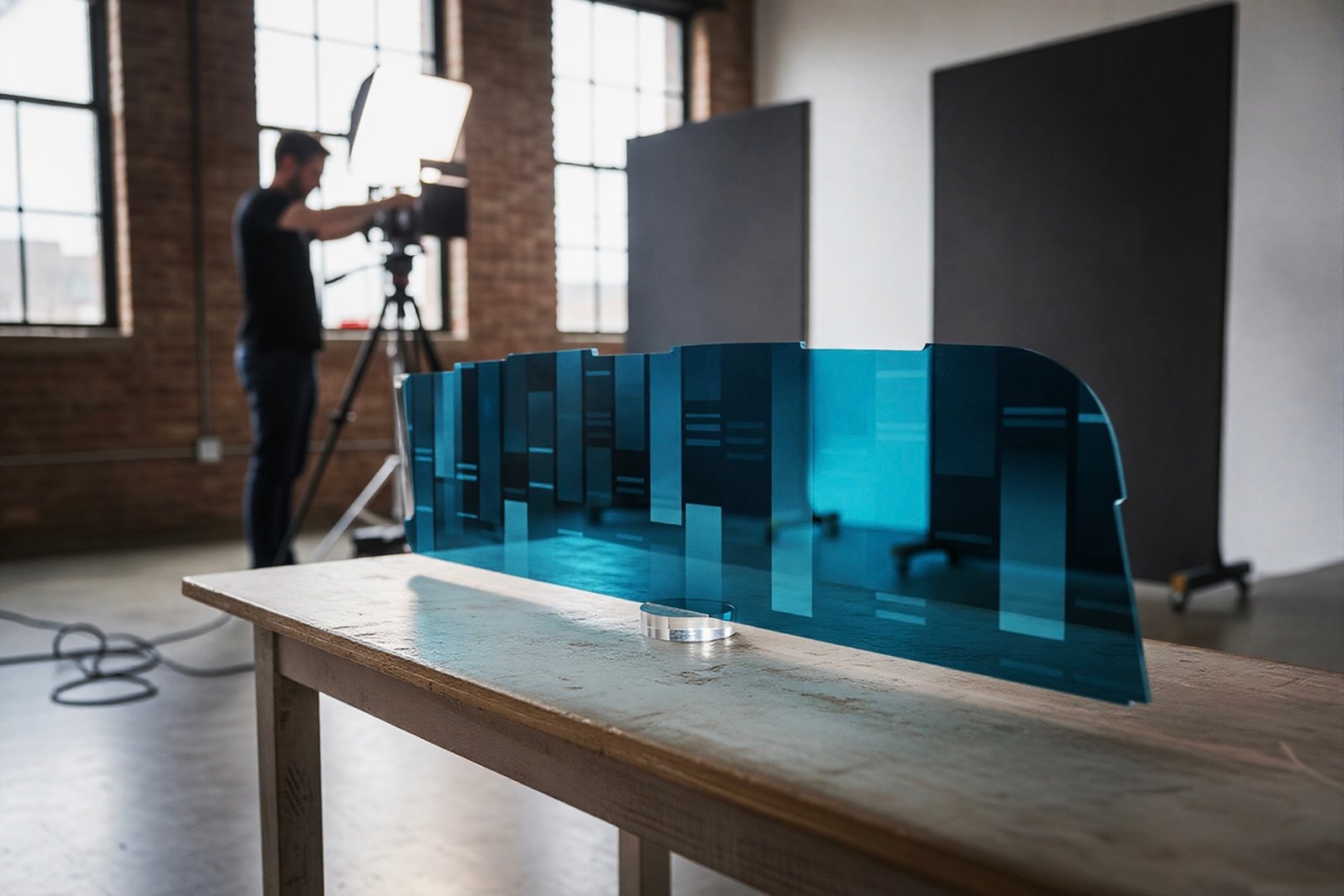
The Nimbus shields ensure liquid isolation and airflow stability, using branded, deep dyed transparent thin-films and optical bonding to transform a critical safety component into functional art.
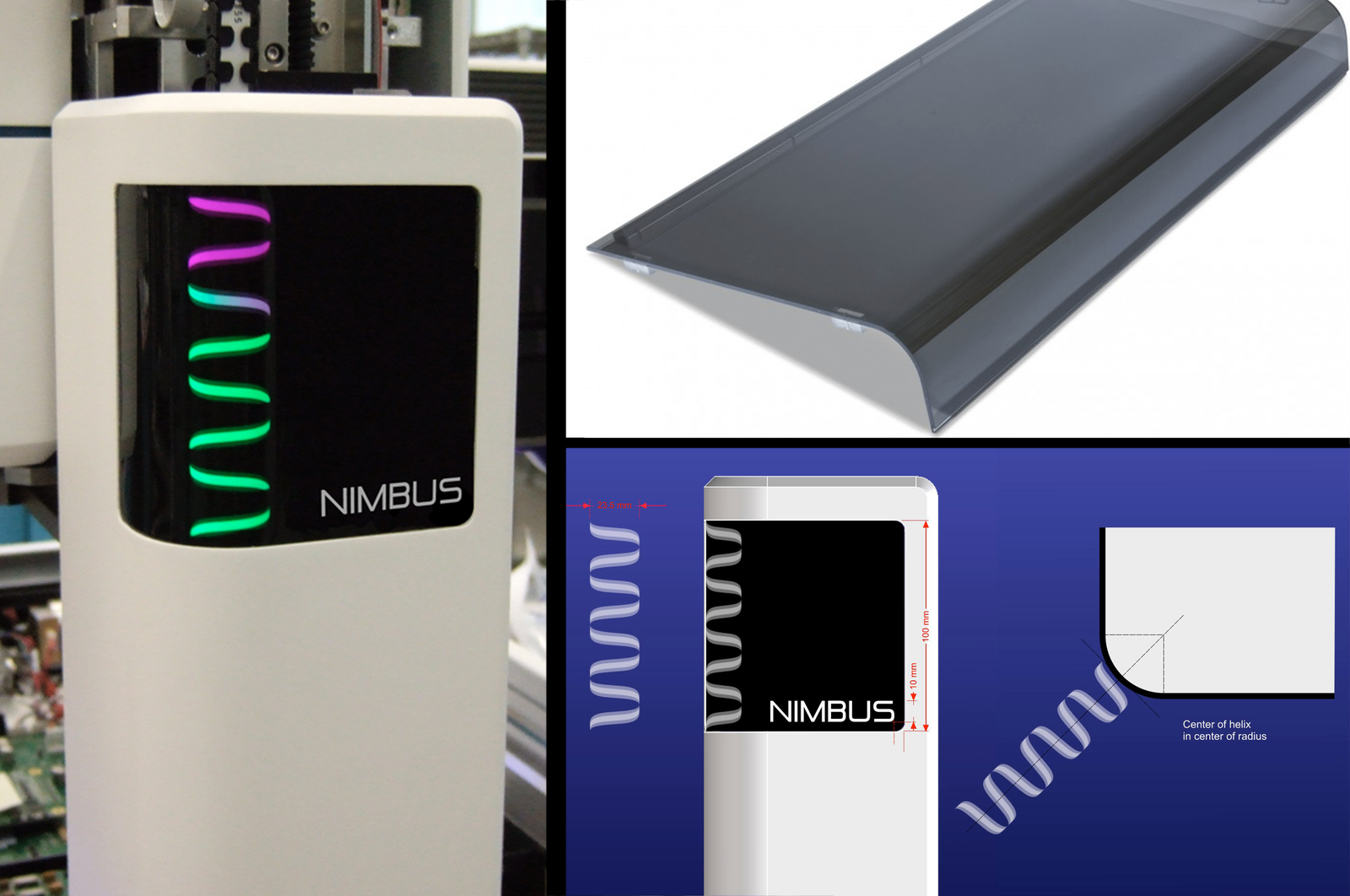
Backlight
Drape Forming Acrylic
The Nimbus Helix displays are printed second-surface while flat, then carefully formed using a highly polished aluminum tool once the optimal temperature is reached. To ensure precise tolerances and a stress-free finish, the acrylic is cooled at a strictly controlled rate.
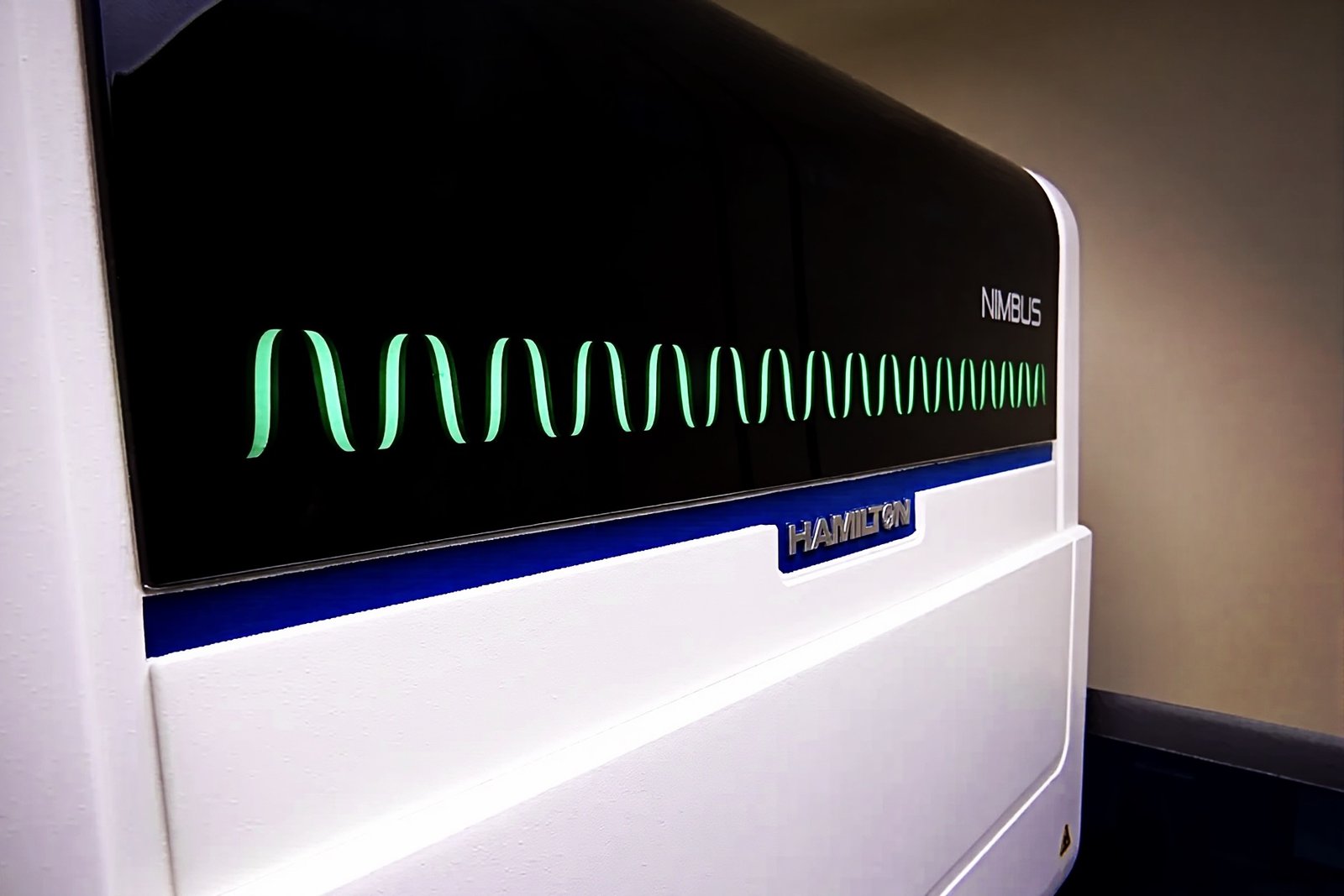
The brief
In-Mold backlit for remote visual management
The Nimbus console supports various Visual Management tools designed to provide lab technicians with the immediate status of any batch at a glance. The Helix icon features bright backlighting that continuously cycles through defined color patterns until the process reaches its final stage.
Outcome
“Delivered a comprehensive production package—including finalized artwork and a validated stack-up—resulting in a console with consistent, high-precision readability across all shifts.”
The release package consisted of layered vector artwork, separations, dimensioned control drawings, and a documented stack-up, providing the print shop with all necessary specifications to proceed without clarification. Deliverables also included tooling, fixtures, and assembly devices, complemented by detailed usage instructions, large-format assembly illustrations, and ISO-compliant quality documentation.
Next step
Have a Medical MMI that needs this kind of discipline?
Send a sketch, a stack-up, or a failing sample. Most enquiries get a technical reply within one business day.