www.thinfilmdesigns.com
Blog_01 — Design for Manufacturing
Registration Tolerance Is Where Membrane Switch Cost Hides
February 17, 2025 — 6 min read
Most scrap in printed interfaces traces back to a handful of dimensions drawn tighter than the process can hold. The artwork looks correct on screen, the stack-up checks out in review, and the first press run still produces a yield number nobody wants to put in a quote.
A membrane switch is a stack of printed and die-cut layers, each registered to the next. Every interface carries a registration budget, set by the coarsest operation in the chain — usually screen print, sometimes die cut.
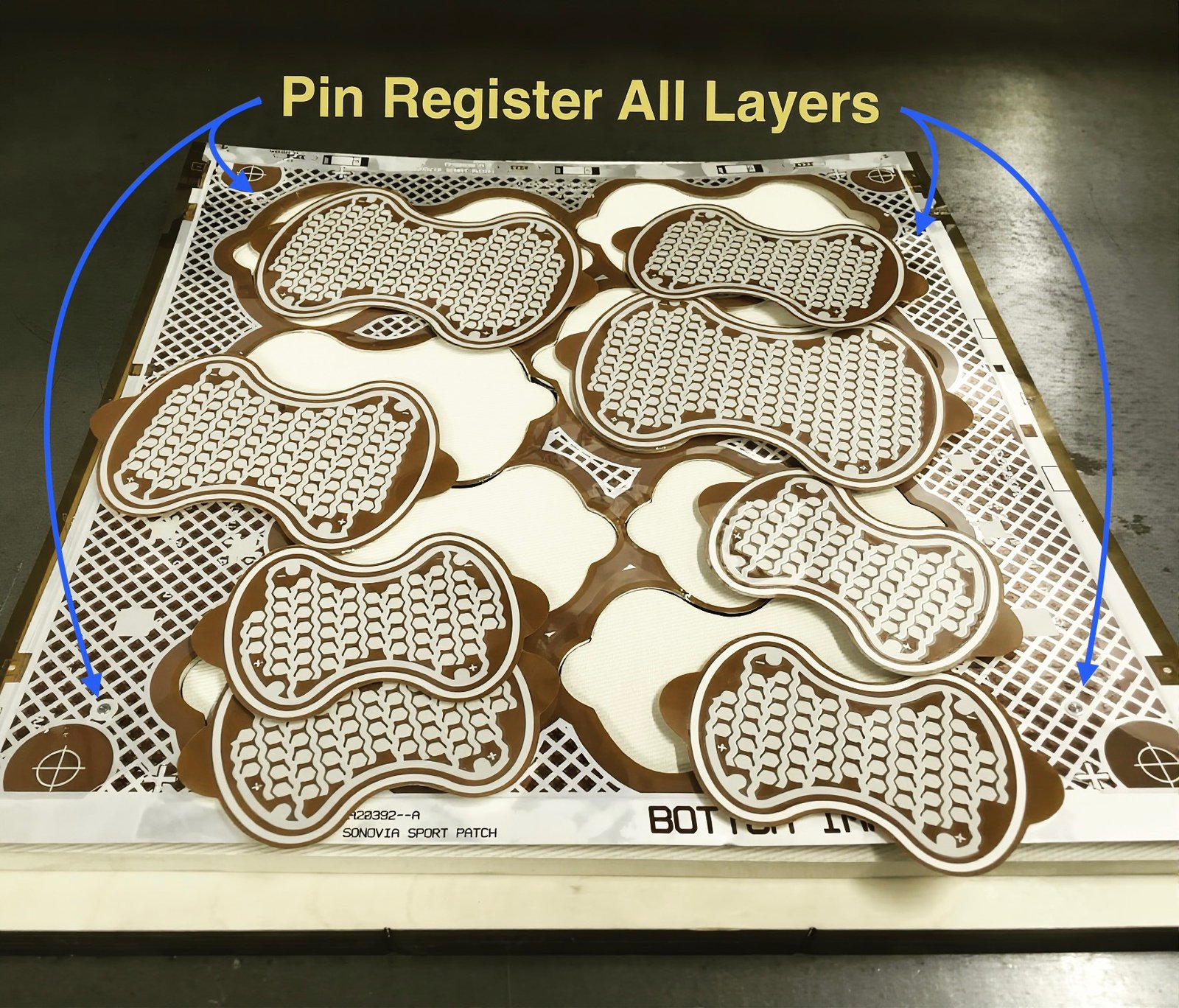
A Workflow Overview for Printed Electronics
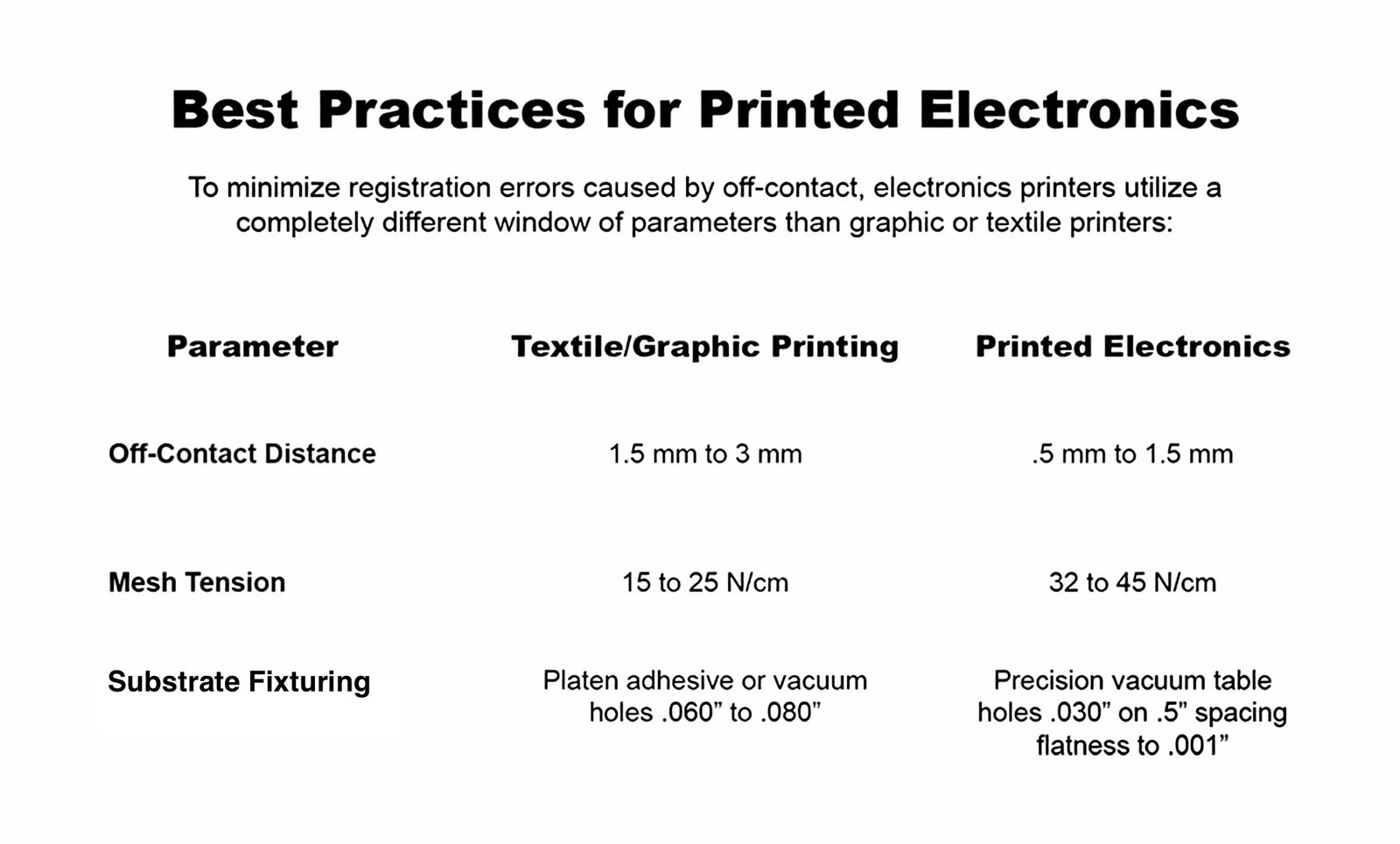
In printed electronics, off-contact distance is one of the most critical variables affecting registration and dimensional accuracy. Because printed electronics requires extreme precision (often down to tens of micrometers for traces and gaps), any unintended variation can cause short circuits, open circuits, or resistance fluctuations.
Before relying on a film or laser imaging system, ask whether it has been calibrated—and whether that calibration can be verified with a measurement standard on every screen. Next, confirm that every screen has been tensioned to faithfully reproduce that same measurement standard. Consistent tension is essential if the imaging system’s accuracy is to carry through to the printed result.
The most important requirement for continuity and reproducibility is documentation. Every item in the process must be recorded, and—more importantly—clearly understood by everyone involved. A documented standard only works when the whole team can apply it consistently.